

Running & Gait Biomechanical Analysis
Running is actually the most efficient form of human locomotion that does not involve wheels or wings. Our body was evolved to run, this has been proven by multiple sources of evolutionary anthropology studies and force plate analyses.
However, if you run with dysfunctional biomechanics you're likely causing excessive wear and tear with each stride. Proper stride mechanics improve efficiency and effectiveness of training, and make running way more enjoyable.

Running (or walking) Stride Assessment
By assessing how you run or walk we are able to view dysfunction in real time. We then assess whether the issue(s) are caused by mechanical block, neuromuscular deficit, technique, protective mechanism from an old injury, or improper equipment (footware, brace, assisted device, etc).
.png)
Mobility Assessment
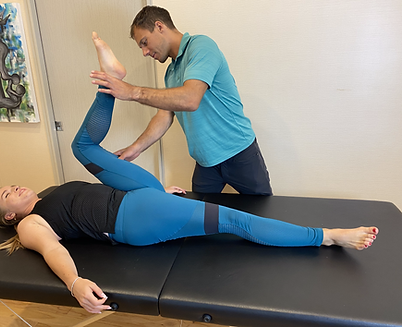
By measuring joint motion, particularly your ankles, hips, and spine, we find factors that cause stride dysfunction. It is also probable and often overlooked to have a neck or shoulder issue that is causing a dysfunctional stride.

Stability Assessment
If you have instability, usually in your ankle or hip, it leads to an asymmetric stride thus more strain on your body. Ankle instabilities often lead to knee pain, hip instabilities often lead to knee or back pain.
Kinesthetic Sequencing
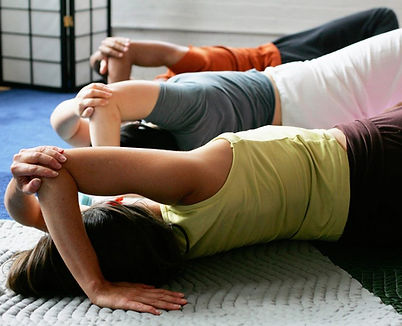
Proper sequencing and kinesthetic awareness is necessary for efficient running technique. If you don’t know what your right shoulder is supposed to do when your left hip moves forwards, it could cause knee pain! Learn how to run or walk with a smooth stride by becoming aware of what your entire body should be doing, not just your legs.